The Trading Journal: The Habit That Separates Pros From Gamblers
The fastest way to improve as a trader costs nothing and takes five minutes a trade. Here's exactly what to record - and what to look for.
If there's one habit that separates consistently profitable traders from frustrated ones, it's this: they keep a journal. Not because they love paperwork - because a journal shows you the truth about your trading.
What to record for every trade
| Field | Example |
|---|---|
| Date and time | Tue 14:40 |
| Market and direction | GBP/USD, buy |
| Setup | Daily zone + 4H engulfing after a sweep |
| Entry, stop, target | 1.2680 / 1.2650 / 1.2770 |
| Risk | 1% |
| Result | +3R |
| Rules followed? | Yes / No - which one broken |
| Emotion | Calm, rushed, fearful, revenge? |
| Screenshot | Before and after |
The screenshot is the most valuable part. In three months you'll have a library of your own setups - the best study material you can get.
What to look for every Friday
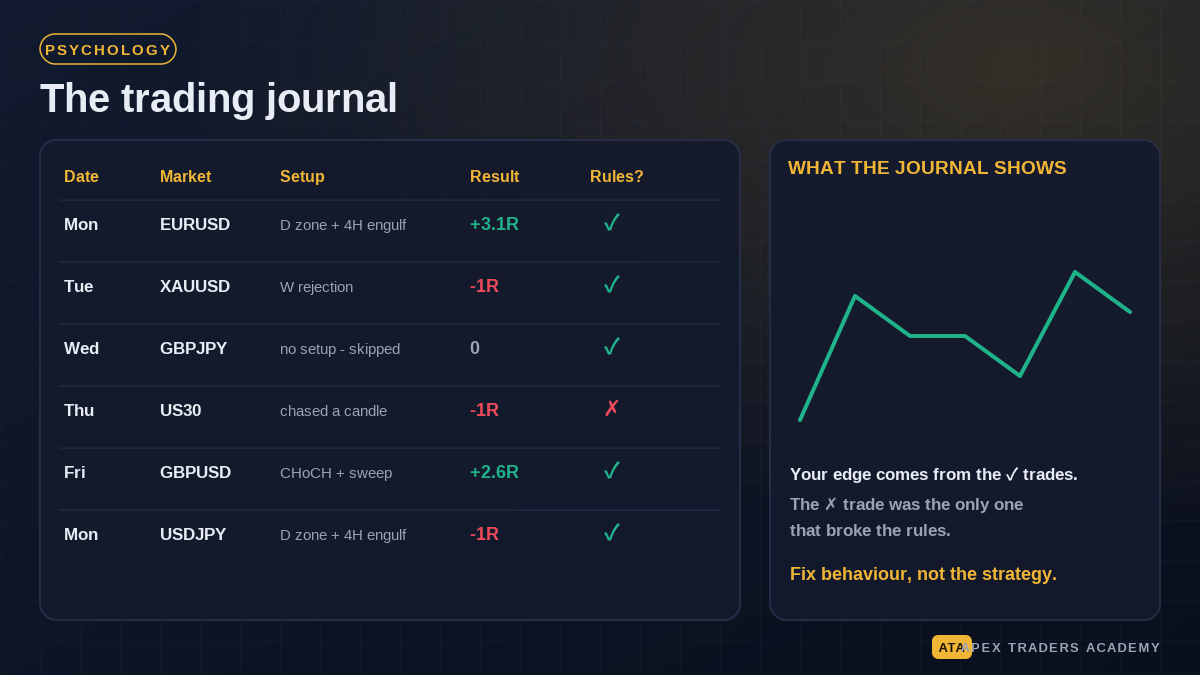
- Rules followed vs broken: what's your result on trades where you followed every rule? And on the others?
- Best markets: maybe gold works brilliantly for you and GBP/JPY doesn't
- Best times: do your London-session trades beat your late-night trades?
- Repeat mistakes: entering early? Moving stops? Trading after a loss?
Simple tools
- A notebook (seriously - it works)
- A spreadsheet with the columns above
- Screenshots saved in a folder per month
Keep it simple enough that you'll actually do it after every single trade.
The journal in the Apex routine
Our students review their journal every Friday, and mentors look at the same journals in the community. When we can see your screenshots and notes, we can tell you exactly what to fix - which is how months of trial and error become weeks.
What gets measured gets managed. What gets journaled gets fixed.
Where to go from here
You've finished the core library - congratulations. Go back to the 8-step entry model and read it again; it will make much more sense now. Then download the free indicators and setup guide, and when you're ready for live charts and mentorship, join the academy.
Want to see this on live charts?
Inside the course we apply every lesson to real Weekly, Daily and 4H charts - with mentorship until it clicks.
Education only, not financial advice. Trading on margin carries a high level of risk. Always use a stop loss and risk only what you can afford to lose.
Next lessonYour First 90 Days in Trading: A Roadmap for Complete Beginners →
Most beginners lose money in their first three months - not because trading is impossible, but because they do things in the wrong order. Here is the right order.