Trading Psychology: Fear, Greed, FOMO and Revenge Trading
Your strategy can be perfect and your mind can still lose you money. Here's how to recognise the emotional cycle - and step off it.
Ask experienced traders what made them profitable and most won't say "a new indicator". They'll say: "I learned to control myself." The chart doesn't care how you feel - but your account does.
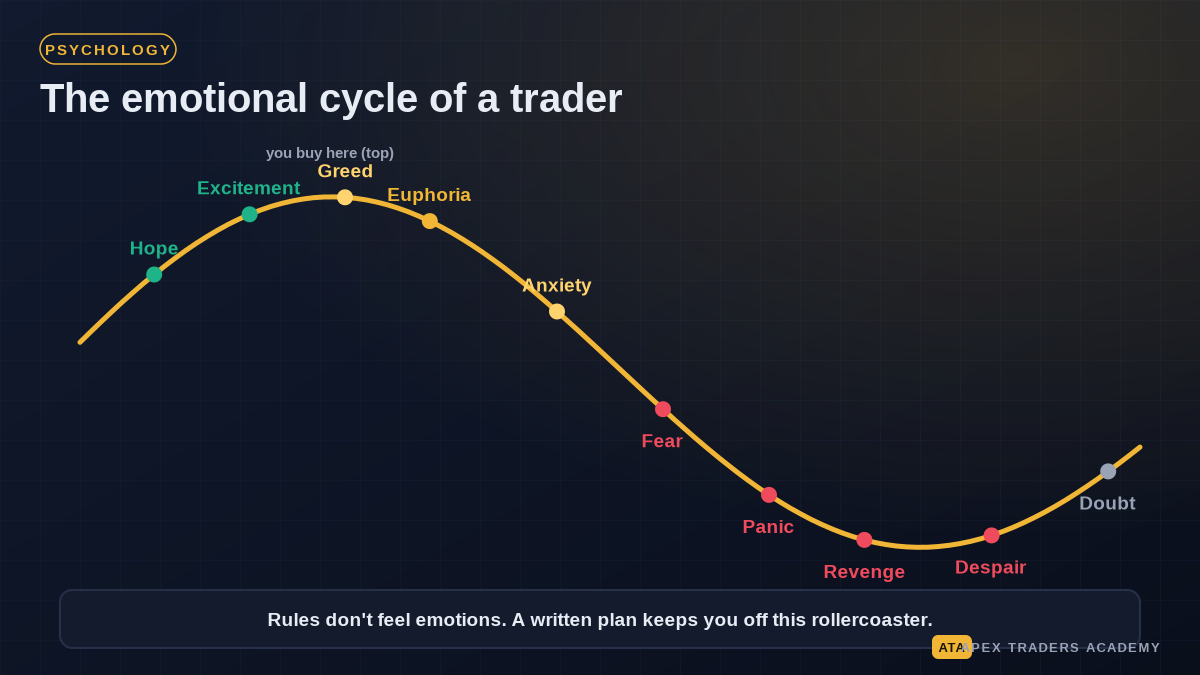
The four emotions that cost the most
Fear
You see your setup... and you don't take it, because the last two trades lost. Or you close a winning trade at +10 pips because you're scared it will turn. Fear makes you miss winners and cut them short.
Greed
You're in profit and refuse to take it at your target - "it'll go further". Or you double your lot size after a winning streak. Greed turns winners into losers and good weeks into blown accounts.
FOMO (fear of missing out)
A big candle shoots up and you jump in without a level, a stop or a plan. You're usually buying at the top - at a premium, right where the smart money takes profit.
Revenge
You lose, and you immediately take another trade - bigger - to "win it back". It's the single most expensive emotion in trading. One loss becomes three.
Why you can't just "be disciplined"
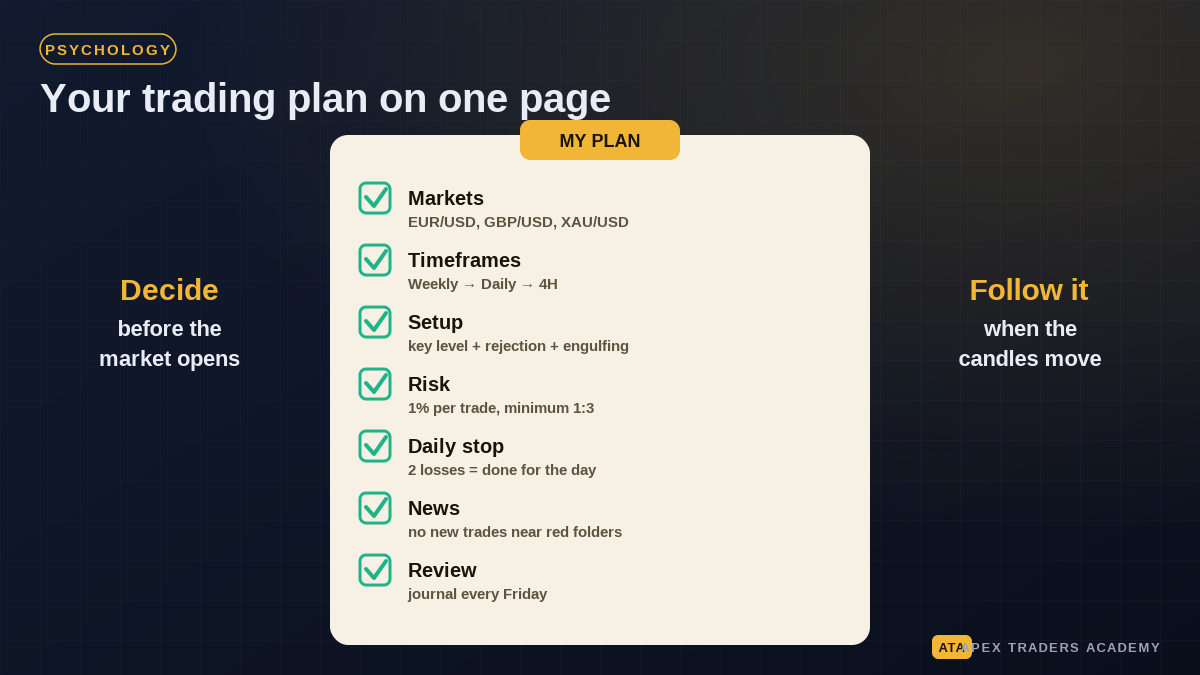
Emotions are human. You can't switch them off. What you can do is build a system so emotions have nothing to decide:
- A written trading plan that defines exactly what a valid setup is
- Fixed 1% risk, so no single trade feels life-changing
- Alerts, so you're not staring at charts all day
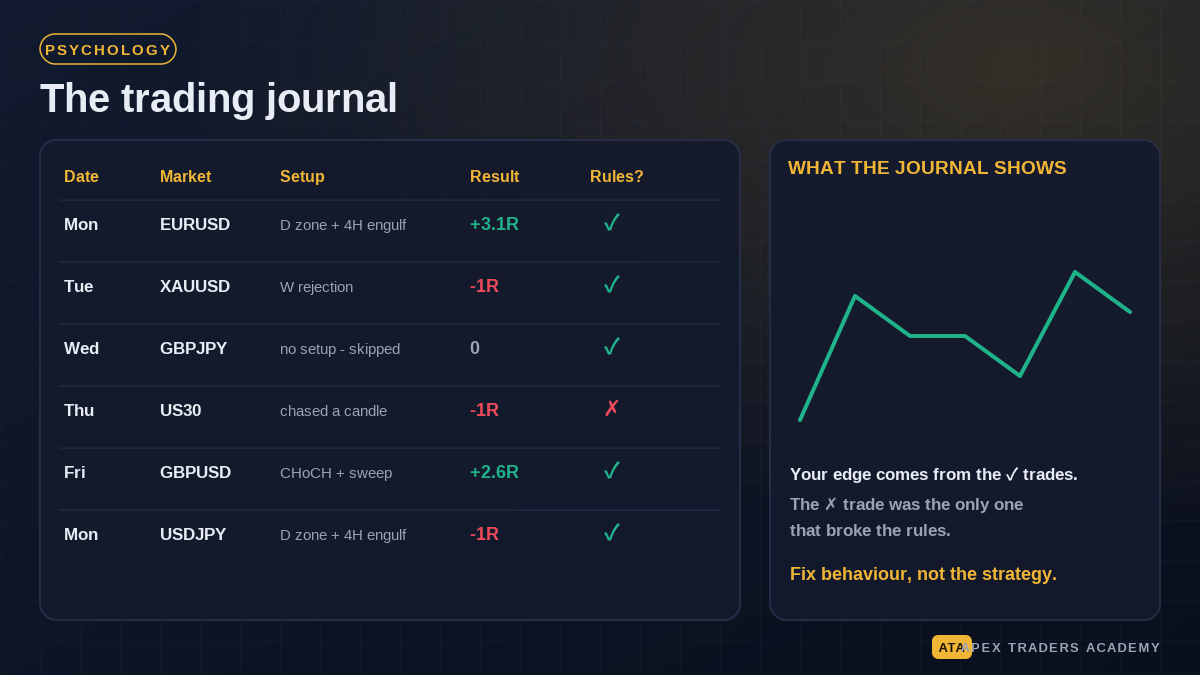
- A journal, so you see your patterns in black and white
- Daily and weekly loss limits, so a bad day can't become a disaster
Practical habits that help
- Decide before the market moves - mark your levels and plans on Sunday
- Use the checklist before every trade (see the 8-step entry model)
- Walk away after entering - set stop and target, close the app
- Don't trade tired, angry or broke - money you need creates fear
- Measure yourself by rules followed, not by profit this week
The market transfers money from the impatient to the patient.
Next lesson: How to build a trading plan
Want to see this on live charts?
Inside the course we apply every lesson to real Weekly, Daily and 4H charts - with mentorship until it clicks.
Education only, not financial advice. Trading on margin carries a high level of risk. Always use a stop loss and risk only what you can afford to lose.
Next lessonHow to Build a Trading Plan (Free One-Page Template) →
A trading plan turns trading from guessing into a business. Here's what goes in it - and a template you can copy tonight.